About Non Compensated Flow Control Valves
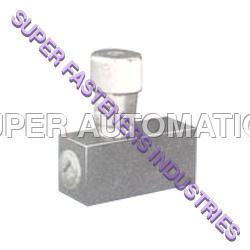
Non Compensated Flow Control Valves
- Types: Inline and sub plate mounted
- Size: 1/4" to 1" BSP(F) Colourflow calibrated scale inline full flow check valves
- Flow Rate: 0 - 140GPM depends on size
- Pressure: 2000PSI for brass valves. 5000 PSI for steel valves.
- Material: From solid barstock in C.S., Brass, S.S. 304, S.S. 316
Precision Manual Flow ControlThese needle-type valves enable exact flow regulation, thanks to their manual adjustment mechanism. Users can easily modulate the mediums flow according to system requirements without specialized tools. This reliably supports applications where tailored control is vital, including machine tools and automation equipment.
Versatile Connection & ConstructionDesigned with threaded BSP/NPT ends, these flow control valves suit a broad range of installations. Their robust construction in carbon or stainless steel, coupled with leak-proof features, guarantees durability even in high-pressure environments. Options for nitrile and Viton seals allow flexible media compatibility.
FAQs of Non Compensated Flow Control Valves:
Q: How do Non Compensated Flow Control Valves function in hydraulic systems?
A: These valves manually adjust the flow of oil within hydraulic circuits by varying the needle position. The operator sets the desired flow rate, enabling precise control over system speed or actuator movement as required.
Q: What are the primary benefits of using needle type Non Compensated Flow Control Valves?
A: Needle type valves offer accurate flow adjustment, robust leak-proof design, and adaptability to various media and pressure conditions. Their simple manual operation contributes to system reliability and low maintenance.
Q: When should I use a Non Compensated Flow Control Valve with a hydraulic system?
A: Use these valves whenever precise, manual regulation of flow is necessary, such as adjusting the speed of actuators or optimizing process cycles in hydraulic machinery and automation setups.
Q: Where are these flow control valves typically installed within industrial automation or machinery?
A: They are commonly fitted into hydraulic or pneumatic lines near actuators or control points, where direct flow regulation is needed for machine tool operations, assembly lines, or other automated equipment.
Q: What media can these valves safely regulate?
A: These flow control valves can handle compatible oil, air, or water, provided the sealing (Nitrile or Viton) matches the media to prevent leakage and ensure longevity.
Q: How does the manual adjustment process work on these valves?
A: The operator turns the needle or knob to increase or decrease flow, allowing on-the-spot adaptation to fluctuating system demands without electrical or automated controls.
Q: What advantages do stainless steel construction and hardened steel/brass disc materials offer?
A: Stainless steel variants provide enhanced corrosion resistance, while hardened steel and brass discs improve valve longevity and performance under high pressure, ensuring durability in demanding environments.
 Send Inquiry



 Send Inquiry

 Send Inquiry

